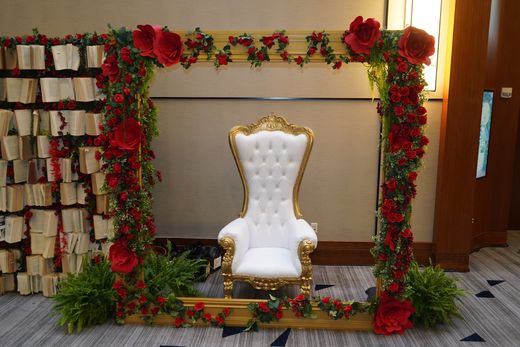
Their elevated backrests introduce architectural structure into open layouts, guiding attention toward focal areas while improving spatial organization without physical partitions.
In modern event production, high-back chairs are treated as spatial instruments rather than decorative furniture. They influence sightlines, seating priority, and circulation flow, making them essential in luxury lounges, corporate environments, and high-end brand activations.
A high-back chair is a seating form with a backrest that extends above shoulder level, often reaching head height or higher. This vertical extension creates a strong visual presence that alters how space is perceived in open environments.
In event and hospitality design, high-back chairs are used to:
Because of their scale, they function as spatial markers that naturally organize movement and attention within a venue.
Luxury in spatial environments is influenced by hierarchy, control of attention, and perceived exclusivity. High-back chairs activate these perceptions through three core mechanisms rooted in environmental psychology.
Human perception prioritizes vertical contrast when scanning a space. Taller objects naturally draw visual attention first, making high-back chairs immediate focal points within a lounge layout.
The elevated backrest creates a subtle boundary around the seated guest. This reduces visual exposure and increases psychological comfort, even in open environments where no physical separation exists.
In hospitality and event environments, height is consistently associated with importance. High-back chairs reinforce this association by placing guests within a visually elevated seating tier.
Together, these effects create a structured sense of exclusivity without additional decor or architectural changes.
Depth in event design comes from layered composition, not flat furniture placement. High-back chairs form the upper visual layer that completes a structured spatial hierarchy.
A well-designed lounge includes:
This layering improves spatial readability and prevents layouts from feeling flat or incomplete.
The result is a lounge that feels:
High-back chairs function as soft architectural dividers. Rather than physically separating space, they create implied boundaries that guide guest behavior through visual cues.
This is especially effective in open event environments where flexibility is required. Guests instinctively interpret changes in seating height as shifts in spatial purpose.
Common applications include:
This approach allows designers to structure large venues without interrupting flow or visibility.
Sightline management is essential in event environments where multiple visual elements compete for attention.
High-back chairs support this by:
This improves clarity in audience-facing layouts and strengthens focus during presentations, performances, or brand moments.
Material selection plays a major role in determining whether high-back chairs feel functional or premium. Texture, reflectivity, and tone influence perceived value more than form alone.
Common luxury materials include:
Put these ideas to work. Tell us about your event and we will send a free creative proposal.